
A Training Facility Example That Builds Better Skaters
A strong training facility example is not a room full of hockey gear with a patch of plastic ice in the corner. It is a purpose-built environment where athletes can repeat the right movements, receive coaching, track progress, and leave better than they arrived. For families, it creates more quality reps without the cost and scheduling limits of arena ice. For operators, it turns underused square footage into a reliable, year-round performance and revenue asset.
The difference comes down to design decisions. Floor space matters, but so do skate glide, puck response, traffic flow, durability, and how easily the facility can support beginners at 4 p.m. and serious players or goalie sessions at 8 p.m. Here is what a high-performing synthetic ice facility can look like in practice.
A Training Facility Example Built Around Repetition
Picture a 3,500-square-foot hockey skills center in a suburban retail or warehouse location. The operator serves youth teams, private coaches, adult players, and goalies. Instead of depending on expensive refrigerated ice or seasonal access, the facility installs a 1,500-square-foot synthetic ice rink as its centerpiece, with dedicated shooting and strength areas around it.
The rink is not designed as a miniature arena. It is designed for high-value repetitions. One end includes a regulation-sized net, shooting targets, and passers for release work. The other end is left open for skating mechanics, edge control, pivots, transitions, and small-group drills. Along one side, a coach has clear sightlines to every athlete on the surface.
This layout supports a simple business reality: athletes improve when they get more intentional touches. A player can take 200 shots in a focused session, work on a tighter turn radius, or receive immediate correction on stride mechanics. That is difficult to achieve during a crowded team practice on rented ice.
For the facility owner, the same rink can host private lessons in the afternoon, small-group development programs in the evening, weekend camps, birthday events, and team bookings. The surface is working far more hours than a traditional rink slot, without refrigeration equipment, ice resurfacing, or a seasonal operating window.
Start With the Training Outcome, Not the Room
The best facility designs begin with a direct question: what should athletes be able to do better here? The answer determines the rink dimensions and the equipment around it.
A shooting-focused center may prioritize a long, clean lane with enough room for receive-and-release drills, passing stations, and multiple net positions. A power-skating or figure-skating studio may need an open surface that allows coaches to watch body position, edges, turns, and jumps without obstructions. Goalie facilities need a different approach altogether, with crease space, net depth, shooter angles, and room for lateral movement.
Trying to make every square foot serve every discipline can dilute the result. A compact rink can be exceptional for stickhandling, shooting, and skating mechanics. It will not replace a full sheet for systems work or long-distance conditioning. That trade-off is not a weakness when the facility is honest about its purpose. The goal is to build the most productive environment for the training you sell.
A practical layout for a skills center
In the 3,500-square-foot example, the synthetic ice surface occupies roughly 40 percent of the footprint. Another 20 percent is used for shooting lanes, video review, and dryland mobility work. The remaining area supports reception, equipment storage, benches, retail items, and circulation.
Keep equipment storage close to the training zones. Players should not need to walk across the rink with pucks, training aids, or goalie equipment. Build a clear entry point so staff can check in athletes, manage waivers, and control access during private bookings. If the facility hosts younger players, a visible parent viewing area is also worth considering. It reinforces confidence and gives families a reason to stay engaged with the program.
The Surface Determines Whether Players Want More Ice Time
Synthetic ice is the foundation of the experience. If skating feels slow, inconsistent, or overly resistant, athletes will avoid using it for serious skill work. Coaches will notice it too. A training center cannot build a premium reputation around a surface that makes every stride feel like a compromise.
High-quality synthetic ice should deliver low-friction glide, reliable panel connections, and consistent performance across the entire rink. Material quality and manufacturing process matter. Sinter-pressed, high molecular weight resin panels are engineered for lower friction and greater wear resistance than basic extruded panels. That translates to a skating feel closer to real ice and a surface built to withstand repeated stops, turns, puck impacts, and high-traffic sessions.
Panel connection is equally important. Weak connections can shift, separate, or create distracting seams under load. A secure interlocking system helps maintain a level, stable skating surface, particularly in commercial settings where athletes use the rink all day. SmartRink synthetic ice is built around this performance standard, combining made-in-Germany engineering, sinter-pressed material, and a patented connection system designed for demanding training environments.
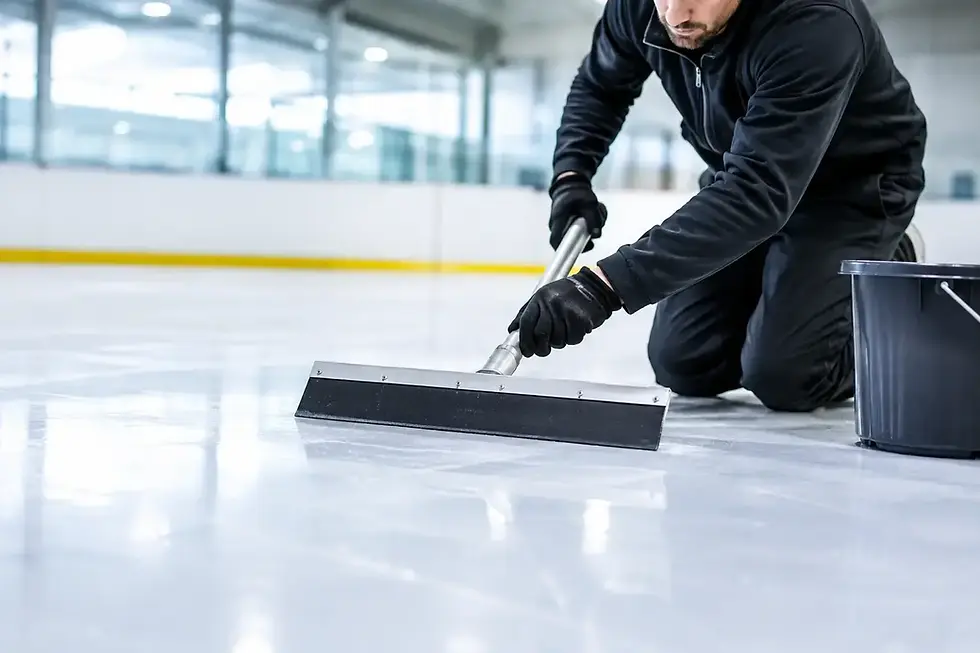
Maintenance should be planned from day one. Synthetic ice does not require flooding, freezing, or resurfacing, but it does require regular cleaning to remove shavings and debris. Skates must be sharpened more frequently than they would be for refrigerated ice. These are manageable operating requirements, especially compared with the utility, labor, and maintenance demands of a refrigerated rink. The facility that sets expectations clearly will deliver a better athlete experience.
Design for Multiple Revenue Streams
A facility becomes more resilient when it is useful to more than one customer group. The same synthetic ice installation can support youth hockey development, private skating lessons, goalie coaching, adult skills sessions, school break camps, and community programs.
The key is scheduling each use without creating chaos. Private training often works best during daytime and early afternoon hours. Team sessions and small groups fill the after-school window. Weekends can be reserved for camps, clinics, birthday events, or family skate experiences, depending on the local market.
Commercial operators should also consider the economics of supervision. A compact training rink can support high-value coaching with one instructor overseeing a small group. A larger public-skate concept may require more staff, more rental skates, and stricter crowd management. Neither model is automatically better. It depends on whether the business is built around athlete development, entertainment, community access, or a blend of all three.
Where facilities often lose performance and profit
The most common mistake is underbuilding the core training surface while overspending on cosmetic features. Players remember whether they could skate, shoot, and train effectively. They do not choose a facility because the lounge has expensive finishes.
Another mistake is buying low-cost panels without evaluating glide, wear characteristics, and connection reliability. The initial purchase price may look attractive, but poor skating quality can reduce repeat visits and weaken the value of coaching programs. For a facility, the surface is not a decoration. It is the product athletes use every session.
Finally, operators sometimes install a rink without a program behind it. Synthetic ice creates opportunity, not automatic demand. Before opening, define the lesson packages, group sessions, memberships, coach partnerships, and local team relationships that will keep the schedule active.
Make the Facility a Place Athletes Can Measure Progress
The strongest training centers make improvement visible. Use simple benchmarks: shooting accuracy, release speed, skating patterns, puck-control drills, save percentage, or completed repetitions. Video stations can help coaches show players what changed from one session to the next.
This matters to parents as much as athletes. Parents are investing in access, instruction, and their child’s development. When they can see cleaner mechanics, stronger edges, quicker hands, or more confidence on skates, the value of year-round training becomes clear.
A well-designed synthetic ice center does not need to imitate a full arena. It needs to give athletes a place to do the work that arena time rarely provides enough of: focused repetition, skilled coaching, and immediate feedback. Build around that standard, and the facility becomes more than a place to skate. It becomes the place where better players are made.


Comments