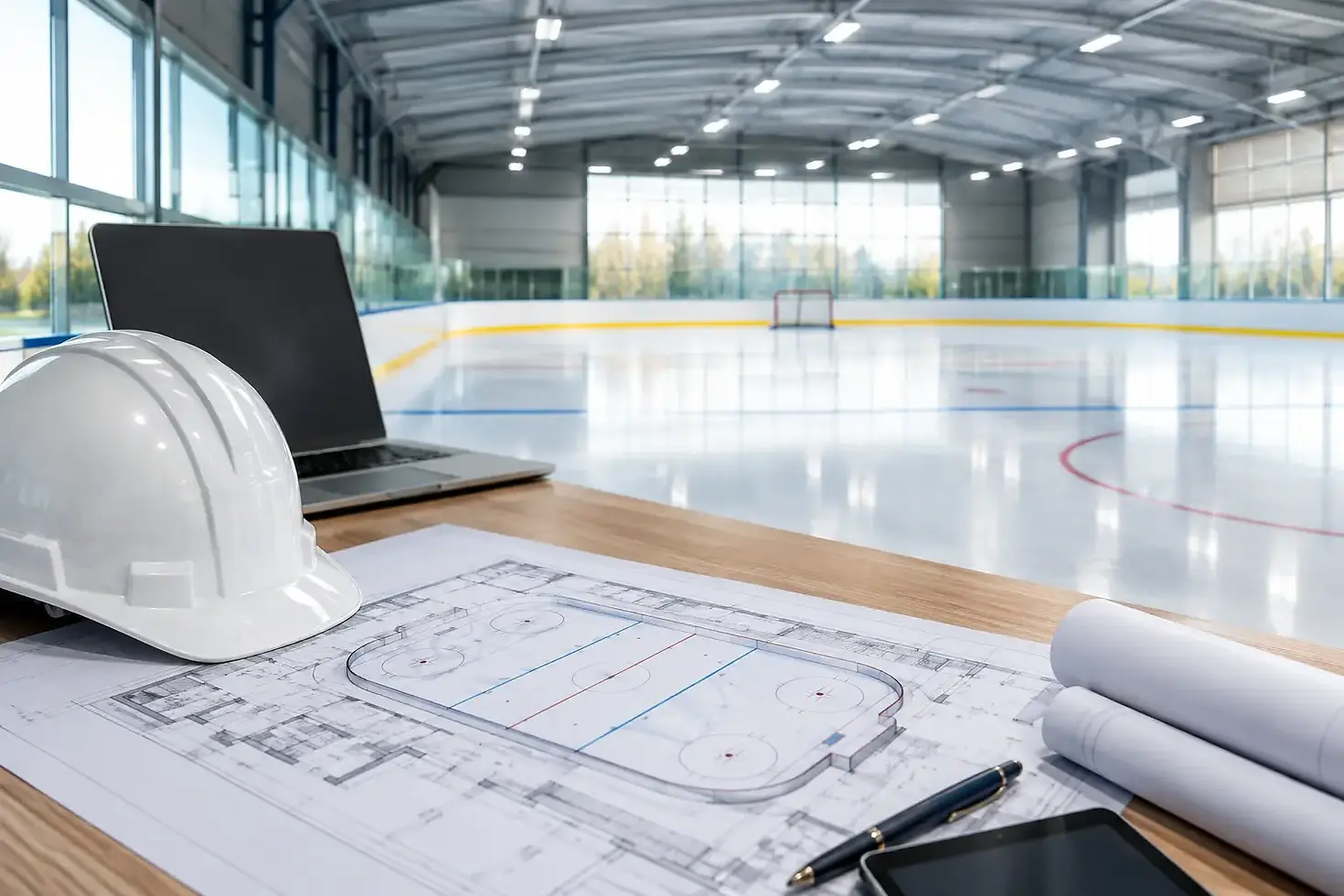
Commercial Rink Planning That Performs Year-Round
A commercial rink is not simply a large skating surface. It is a revenue-producing environment where glide quality, guest flow, safety, staffing, and repeat visits all meet. Strong commercial rink planning begins by defining the experience you want people to return for, then selecting a surface and layout capable of delivering it every day.
For a mall operator, that may mean a compact attraction that creates foot traffic and seasonal excitement without refrigeration infrastructure. For a hockey training center, it may mean a hard-working skills rink that stays open from morning sessions through late-night rentals. The purpose changes, but the standard does not: the rink must skate well, look professional, withstand traffic, and make financial sense.
Start Commercial Rink Planning With the Business Model
Before choosing panel dimensions or designing boards, establish how the rink will earn its place in your facility. A rink built for public admission has different priorities than one designed for private training, hockey development, birthday parties, or corporate events.
Public skating attractions need intuitive circulation, a clear entry point, rental space, spectator visibility, and enough open ice for first-time skaters to feel comfortable. Training centers need usable repetition space. That could mean a shooting lane, a goalie crease, a skills zone, or room for small-group instruction. Event operators need fast installation, dependable connections, manageable storage, and a footprint that adapts to different venues.
The operating model also determines how much support space you need. Ticketing, waivers, skate rentals, lockers, benches, party areas, staff stations, and maintenance access consume square footage. Planning only for the skateable area is a common mistake. A rink that looks large on a drawing can feel cramped once guests, rental skates, strollers, and staff enter the picture.
Estimate your daily capacity early. Consider session length, average occupancy, turnover time, peak-day demand, and whether the rink will host instruction or private bookings between public sessions. A smaller rink with a disciplined schedule can outperform a larger surface that lacks a clear operating plan.
Choose a Surface Built for Real Traffic
For commercial applications, surface performance is not a cosmetic detail. It shapes the guest experience, affects return visits, and determines how much maintenance your team performs over the life of the rink.
Synthetic ice makes year-round skating possible where refrigerated ice is impractical, expensive, or simply unnecessary. But synthetic ice is not a commodity. Material composition, manufacturing method, density, lubrication properties, thickness, and panel connection design all influence glide and durability.
A low-friction surface gives beginner skaters a more enjoyable first experience and lets hockey players work on edges, transitions, puck control, and shooting with greater confidence. Lower-quality panels can feel slow, inconsistent, or difficult to skate, particularly as they wear. That is a poor trade-off for a commercial operator whose reputation depends on a smooth, repeatable experience.
Look for commercial-grade panels engineered for heavy use, not light residential recreation. Sinter-pressed high molecular weight resin is designed to provide a dense, durable surface with strong skating characteristics. Equally important, the connection system must keep the rink stable under repeated skating loads. Panels that shift, separate, or create noticeable seams can interrupt stride quality and add unnecessary operational concerns.
SmartRink commercial surfaces are designed around this performance standard: dependable glide, durable material, and a patented connection system built to create a stable skating environment. The goal is straightforward - give guests and athletes the closest thing to real ice without the ongoing energy demands of a refrigerated rink.
Match the Rink Size to the Experience
There is no single ideal commercial rink size. The right footprint depends on user volume, intended activity, available space, and how the site will generate revenue.
A compact rink can work exceptionally well in a mall atrium, resort, plaza, or event setting when it is designed for visibility and efficient guest movement. A rectangular surface is often the best fit for hockey skills because it supports drills, skating patterns, shooting, and coached sessions. A more open shape may better serve public skating, where guests value room to circulate and avoid congestion.
Do not assume bigger is always better. A larger rink requires more panels, more surrounding infrastructure, more staff oversight, and potentially more time for cleaning and setup. If the venue has limited demand or a short operating season, a right-sized rink can protect your investment while still creating a memorable attraction.
Design the Layout Around Movement and Safety
Good rink layouts make movement feel obvious. Guests should know where to enter, where to get skates, where to put belongings, where to wait, and how to exit without crossing into busy skating lanes.
Place check-in and waiver collection before the rental counter, not beside the rink entrance. Build enough waiting space for peak periods, especially when families arrive together. Spectator seating should offer a clear view without blocking circulation. If food and beverages are permitted nearby, establish a distinct boundary that keeps spills and foot traffic away from the skating surface.
Boards deserve careful attention. They create the physical edge of the rink, guide traffic, provide support for beginners, and help define the visual identity of the installation. Depending on the venue, transparent sections can improve sightlines and create a more open feel, while traditional boards may better suit hockey training or high-energy public use.
Plan entry and exit gates with operations in mind. A single gate may be sufficient for a small controlled rink. Higher-volume facilities may need separate access points to prevent arriving and departing guests from colliding during session changes. Emergency access should be clear, direct, and never treated as an afterthought.
Lighting matters as much as the surface. Bright, even lighting improves safety and makes the rink more inviting in photographs and video. For entertainment venues, color lighting and branded graphics can add energy, but the rink still needs practical illumination so staff can monitor guests and surface conditions.
Build Maintenance Into the Daily Routine
Synthetic ice eliminates the refrigeration plant, resurfacing equipment, and water consumption associated with conventional ice. That does not mean it is maintenance-free. A commercial rink performs best when cleaning, inspection, and surface care are scheduled from day one.
Daily cleaning removes debris that can affect glide and scratch the surface. Staff should inspect panel connections, edges, gates, boards, and high-traffic areas before opening. The right cleaning method depends on the panel material and facility conditions, so follow the manufacturer’s guidance rather than relying on generic floor-care products.
Commercial operators should also create a simple reporting process. If a staff member notices a seam issue, damaged board hardware, worn rental skate, or recurring congestion point, that observation should reach the person responsible for operations. Small corrections are less expensive than major disruptions.
Staff training is part of rink maintenance, too. Team members need to understand basic safety rules, how to assist inexperienced skaters, how to manage capacity, and when to pause activity for a surface or equipment concern. The best rink surface cannot compensate for disorganized operations.
Budget for the Full Installation, Not Just Panels
The price of the skating surface is only one part of the project. Commercial rink planning should include site preparation, boards, gates, lighting, rental inventory, signage, seating, storage, staffing, insurance, marketing, and any local permitting requirements.
Some costs depend heavily on the location. A permanent indoor training rink may need flooring preparation, wall protection, and dedicated storage. A temporary event rink may require transport planning, load-in access, protective subflooring, and a crew that can install and remove the system efficiently. Outdoor locations may require weather planning, drainage considerations, and a strategy for protecting the surface from debris.
The return on investment should be evaluated against the intended revenue mix. Public admissions, skate rentals, lessons, memberships, private parties, sponsorships, hockey camps, and corporate bookings can all contribute. The strongest projects usually combine more than one revenue stream, which helps the rink stay productive beyond peak skating hours.
Avoid the Decisions That Limit Performance Later
The most expensive planning errors are often made before installation begins. Underestimating support space, choosing panels solely on upfront price, ignoring traffic flow, and failing to define a maintenance routine can weaken an otherwise promising project.
Another mistake is designing for an ideal user rather than the real customer mix. A skills center may welcome serious hockey players, but it may also rely on youth groups, parents, beginner skaters, and birthday parties. A public attraction may target families, yet still benefit from scheduled adult skate sessions or corporate rentals. Design the rink around your highest-value uses without making it unusable for everyone else.
A commercial rink should create opportunity long after opening day. When the surface performs, the layout supports staff, and the business model fits the venue, the rink becomes more than an attraction. It becomes a place where athletes improve, families make a habit of skating, and operators have a durable reason to keep the doors open year-round.


Comments