Does Synthetic Ice Damage Skate Blades?
- Jun 8
- 6 min read
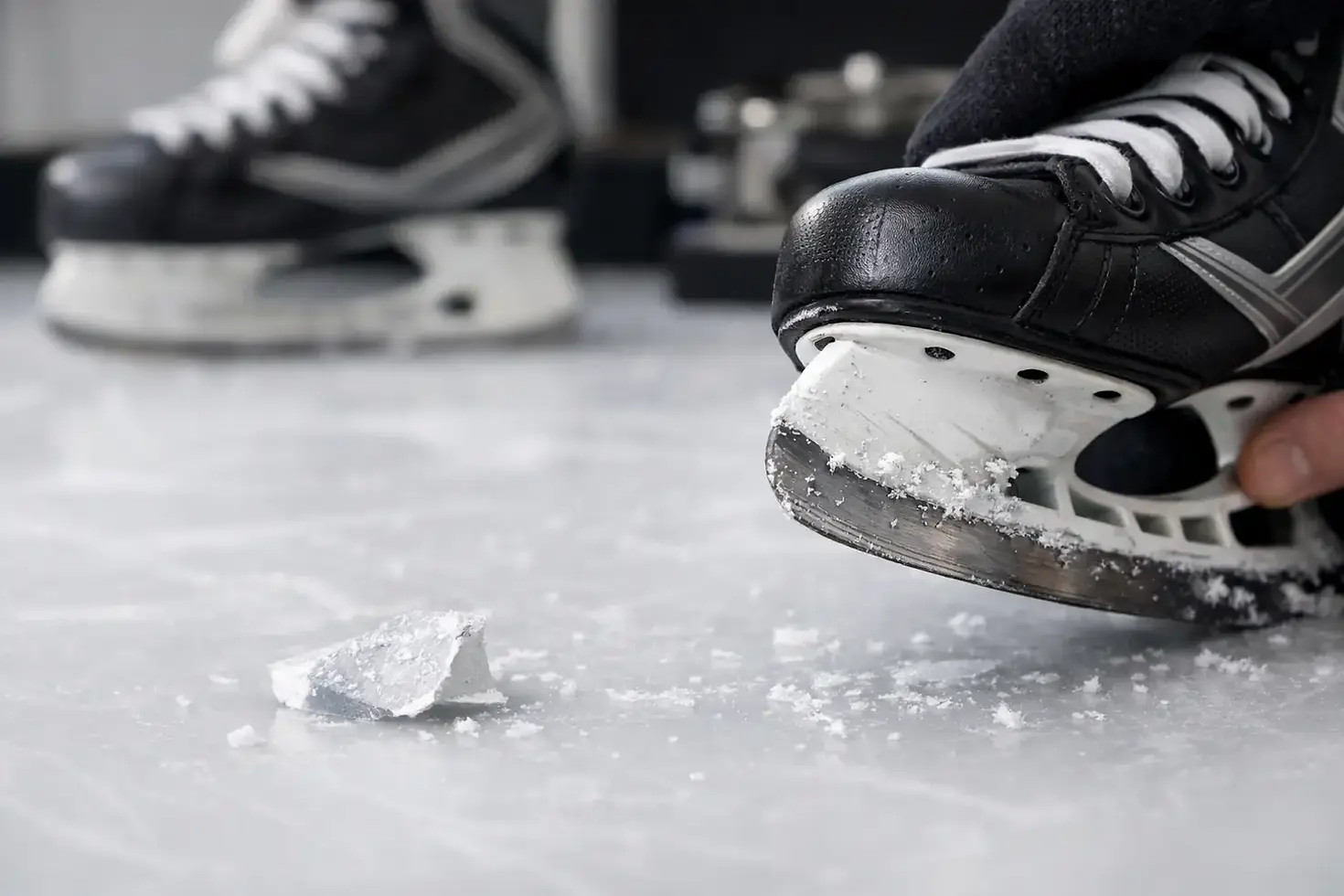
A lot of players notice it after the first few sessions - their skates feel a little less crisp, the edges do not bite quite the same, and the question comes fast: does synthetic ice damage skate blades? The honest answer is no, not in the sense of ruining steel or making skates unsafe. But synthetic ice does wear blades faster than refrigerated ice, and the amount depends heavily on the panel quality, the surface condition, and how serious you are about edge performance.
That distinction matters. For a hockey parent deciding on a home training setup, or a facility operator comparing long-term costs, blade wear is not the same thing as blade damage. One is expected friction. The other suggests abnormal harm. High-quality synthetic ice should increase sharpening frequency, not destroy steel.
Does synthetic ice damage skate blades or just wear them faster?
Synthetic ice creates more friction than real ice. That is the core reason blades lose their edge sooner. On refrigerated ice, a thin layer of water forms under the blade and helps reduce resistance. On synthetic panels, even the best surfaces rely on low-friction polymers rather than actual meltwater. You can get excellent glide from premium material, but you are still skating on a solid surface with more drag than natural ice.
That extra drag affects the hollow and the sharpness of the blade edge. You may need to sharpen more often, especially if you are doing repeated starts, stops, tight turns, or goalie movement patterns. Figure skaters may also notice more wear around toe-pick-heavy drills and edge work. This is normal use, not blade damage.
Actual damage usually comes from poor conditions, not from synthetic ice itself. Dirty panels, low-grade materials, bad installation, exposed seams, debris on the surface, or skating over hard contaminants can scratch or nick blades. If someone says synthetic ice destroyed their skates, it is often a sign they were skating on inferior panels or poorly maintained ones.
Why some synthetic ice is harder on blades than others
Not all synthetic ice performs the same. That is where many buyers get misled. Commodity panels can look similar in photos, but material composition, pressing method, density, and surface finish have a major effect on glide and blade wear.
Lower-grade plastic tends to create more resistance. That means more effort per stride, a less natural feel, and faster edge wear. It also tends to mark up, deform, or hold dirt more easily, which makes the surface even tougher on steel over time. A cheaper panel may save money on day one, but if athletes hate the glide and blades need constant sharpening, the long-term value drops fast.
Premium synthetic ice is engineered to reduce friction as much as possible. Sinter-pressed, high molecular weight materials generally outperform basic extruded plastics because they are denser, more durable, and more consistent under load. For players and coaches, the result is simple: better glide, more realistic movement, and less unnecessary wear on skates.
That is why performance-led manufacturers focus so heavily on the resin itself, not just panel size or price. The surface is the product. If the material is wrong, everything downstream suffers - skating quality, maintenance, user satisfaction, and blade life.
What blade wear looks like in real use
Most skaters will not see visible destruction after using synthetic ice. What they notice first is feel. Edges lose bite sooner. Stops may feel less precise. Crossovers can feel flatter. Goalies may feel less push efficiency at the end of a session block. That is edge wear in practice.
How fast it happens depends on the skater and the training style. A young player using a small backyard rink a few times a week for stickhandling and stride work may only need moderately more frequent sharpening than usual. A high-level skater doing intense overspeed drills, transitions, and repeated acceleration work will wear edges faster. Goalies are often in their own category because butterfly recoveries, shuffles, and T-pushes put a lot of repetitive stress on the steel.
Blade type also matters. Higher-quality steel can hold an edge better than entry-level runners. Sharpening hollow matters too. Some players running a deeper hollow may feel wear more quickly because they are more sensitive to edge definition. Others on a shallower cut may tolerate synthetic sessions longer before noticing any drop-off.
How often should you sharpen after skating on synthetic ice?
There is no universal number, and anyone giving one should be careful. A lot depends on surface quality, session length, skater weight, drill intensity, and personal preference. Some players sharpen every few synthetic sessions. Others mix synthetic and real ice training and sharpen based on feel.
A better rule is to monitor performance rather than follow a fixed calendar. If your edges start slipping, your turns feel less controlled, or your stop feels delayed, it is probably time. Competitive players and figure skaters tend to notice those changes quickly. Younger recreational skaters may not care as much, but they still benefit from a consistent maintenance routine.
For commercial operators, this matters from a customer experience standpoint. If users walk away believing synthetic ice is slow or awkward, sometimes the issue is not the panel at all - it is that they are skating on dull blades after repeated sessions. Education is part of delivering a better experience.
How to reduce blade wear on synthetic ice
If your goal is maximum training value with minimum blade wear, surface quality comes first. A better panel will always outperform a bargain panel in the real world. After that, maintenance and skate care do the heavy lifting.
Keep the panels clean. Dust, grit, metal shavings, and outdoor debris are far tougher on blades than the panel material itself. Even a premium surface will skate poorly if it is dirty. Regular cleaning protects glide and helps preserve steel.
Check the installation. Uneven panels, poor connections, or lifted edges can create chatter and unnecessary contact stress. That affects both skating feel and blade condition. The surface should be level, secure, and properly aligned.
Use the rink for training with purpose. Synthetic ice is excellent for repetition, mechanics, puck control, shooting, footwork, and edge development. It does not need to replace every minute of on-ice time. Many serious athletes use it as a high-efficiency training tool, then manage sharpening around their schedule.
Finally, wipe blades after every session and store skates correctly. Moisture is not the main issue on synthetic ice the way it is with refrigerated ice, but general skate care still matters. Clean steel lasts longer and performs better.
Is synthetic ice worth it if it wears blades faster?
For most serious users, yes. That trade-off is part of the equation, but it is usually a manageable one. Sharpening blades more often is a small price compared with the value of year-round access, higher repetition, and training at home or in a non-refrigerated commercial setting.
Think about what synthetic ice solves. It removes schedule limitations. It gives players more touches, more edge reps, more shooting volume, and more development time. It allows facilities to create skating environments where traditional ice is too expensive or impractical. If the surface performs well, the return is measured in skill progression, convenience, and utilization.
The key is buying the right surface. Poor synthetic ice can create the worst version of the category - heavy friction, weak glide, high maintenance, and frustrated skaters. High-performance panels are a different story. They are built to get as close as possible to real-ice feel while controlling wear, preserving durability, and delivering consistent results over time.
That is where experience and engineering matter. SmartRink, for example, positions its systems around measurable skating quality, not just modular plastic tiles. For athletes and operators who care about performance, that is the right standard.
The real answer to the blade question
So, does synthetic ice damage skate blades? If the surface is well-made and properly maintained, no - it does not damage blades in the way most people fear. What it does do is wear edges faster than real ice because friction is higher. That is expected, manageable, and usually outweighed by the training advantage.
If you want the best outcome, focus less on the myth and more on the variables that actually matter: material quality, glide performance, surface cleanliness, installation, and sharpening habits. Get those right, and synthetic ice becomes what it should be - a serious tool for getting better, faster, without needing a refrigerated rink every time you lace up.


Comments