
Synthetic Ice vs Real Ice: What Wins?
Ask any serious hockey parent or facility operator what the hardest part of consistent ice time is, and the answer usually comes fast: access. That is exactly why synthetic ice vs real ice has become a real buying decision, not just a theoretical debate. If your goal is better training, more usable hours, and a surface that fits your budget and location, the right answer depends on what you need the rink to do.
Real ice still sets the benchmark for feel. It is the surface players grow up on, the one used in games, and the standard for edge work, speed, and puck movement. But synthetic ice has changed dramatically over the years, and high-performance panels now give athletes and operators a practical way to skate year-round without refrigeration, resurfacing equipment, or weather concerns.
Synthetic ice vs real ice for performance
This is where most buyers start, and it should be. Performance is not just about whether you can stand up and skate. It is about glide, bite, stride mechanics, stopping, transitions, and how closely the surface supports real skill development.
Real ice has the natural advantage in pure glide. A properly maintained sheet offers lower friction, a familiar feel under the blade, and the fastest overall skating experience. For game simulation, there is no exact substitute.
That said, not all synthetic ice performs the same. Low-grade panels can feel slow, sticky, and inconsistent, which is why some skaters write off the entire category after one bad experience. High-quality synthetic ice is a different conversation. Material density, manufacturing method, panel finish, and connection design all affect skating quality. Better panels reduce drag, hold up longer, and deliver a much more realistic glide than commodity products.
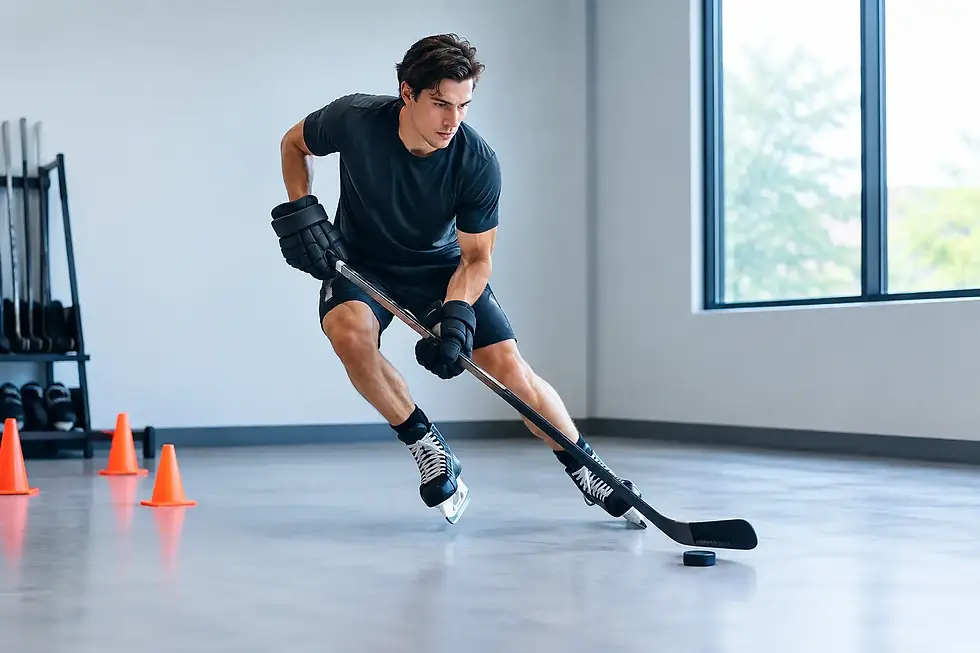
For hockey training, that difference matters. A player working on stride repetition, edge control, stickhandling, passing, and shooting can make serious gains on premium synthetic ice. Goalies can sharpen movement patterns, crease work, and recovery drills. Figure skaters can build confidence and repetition on foundational skills. It is not identical to real ice, but for many training goals, it is close enough to drive results.
Where real ice still has the edge
If you are building for full-scale competition, public sessions, or elite game-speed simulation, real ice remains the top choice. It feels faster, pucks travel more naturally, and skaters do not need to make any adaptation in blade pressure or stride efficiency.
That matters most when the experience itself is the product. A municipal rink, tournament venue, or entertainment space built around the tradition and atmosphere of frozen ice may need the real thing. There is also a perception factor. Some customers simply expect refrigerated ice and see it as part of the premium experience.
But that advantage comes with a major operational burden. Real ice needs refrigeration systems, water, resurfacing, staff oversight, temperature control, and ongoing maintenance. It also depends on a facility built to support all of that. Once you move past performance alone, the economics shift fast.
Why synthetic ice keeps gaining ground
Synthetic ice is not winning because it is identical to real ice. It is winning because it solves problems real ice cannot solve efficiently.
The biggest one is availability. You can install synthetic ice in a basement, garage, training room, backyard structure, retail activation, community center, or event space. No chillers. No compressors. No waiting for winter. That changes how often athletes actually practice.
For families, the value is simple. More repetitions at home usually beat fewer repetitions at the rink. A young player who can skate, stickhandle, and shoot several times a week without driving to an arena has a clear development advantage. For commercial buyers, synthetic ice creates usable skating space in locations where refrigerated ice would be cost-prohibitive or logistically impossible.
There is also a strong business case. Synthetic ice lowers infrastructure costs, reduces ongoing operating expenses, and gives operators more flexibility. Seasonal pop-ups, mall attractions, holiday activations, training centers, and multi-use facilities can all benefit from a rink surface that installs faster and operates with less complexity.
Cost is not even close
This is where synthetic ice vs real ice often stops being a debate and starts becoming a math problem.
A real ice rink requires a significant upfront investment in refrigeration equipment, flooring systems, insulation, dasher boards, water management, and climate control. Then come the ongoing expenses: energy, maintenance, resurfacing equipment, labor, and repairs. If the rink is indoors, utility costs alone can be substantial.
Synthetic ice costs far less to operate because there is no refrigeration system running in the background every hour of the day. Once installed, maintenance is straightforward. You clean the surface, manage debris, and follow the manufacturer’s care guidelines. There is no resurfacer, no freezing cycle, and no utility bill tied to keeping a sheet cold.
For homeowners, that can make the difference between having a rink and not having one at all. For facilities, it can make the difference between an attractive return and a high-overhead project that struggles to stay profitable.
Maintenance and durability
Real ice requires constant attention. The sheet has to be resurfaced, monitored, and protected from temperature fluctuations. If something in the refrigeration system goes down, operations can stop quickly and repairs are rarely cheap.
Synthetic ice asks for less, but quality still matters. Better panels resist wear, maintain their glide longer, and connect more securely. Inferior panels can shift, separate, or degrade under heavy use, which hurts both safety and skating quality. That is why manufacturing standards matter more than many buyers realize.
A well-engineered synthetic surface should be designed for repeat use, stable panel connection, and consistent performance across the rink. High molecular weight materials and advanced pressing methods are especially important because they influence density, surface finish, and long-term skating behavior. This is one area where premium products justify their price.
Training value depends on the user
For a nine-year-old hockey player, a home synthetic rink can be a game changer. More touches on the puck, more skating reps, and more time building confidence usually matter more than chasing perfect ice feel. The same is true for a goalie working on movement patterns or a skater building repetition outside scheduled rink time.
For an elite player preparing for competition, synthetic ice works best as a complement, not a replacement. It is ideal for volume training, individual skill work, and off-hours development. Real ice remains essential for game-speed timing and full-environment adaptation.
For commercial operators, the decision is even more use-case specific. If the goal is daily public skating with a traditional rink experience, real ice may justify the investment. If the goal is year-round access, lower overhead, mobile installations, or skill-development space, synthetic ice often delivers the stronger return.
Choosing the right synthetic ice matters
The phrase synthetic ice covers a wide range of products, and that is where many comparisons go wrong. Buyers compare premium engineered panels against outdated or low-end surfaces and assume the gap to real ice is fixed. It is not.
Higher-end synthetic ice is built to minimize friction, improve glide, and hold performance over time. The panel connection system also matters more than most people expect. Tight, reliable connections help preserve a smooth skating surface and simplify installation. Poor connections create uneven seams, movement, and avoidable wear.
For serious buyers, the smarter question is not just synthetic ice vs real ice. It is premium synthetic ice vs the cost, complexity, and limitations of refrigerated ice. That is a much more useful comparison, especially if your goal is practical performance rather than nostalgia.
SmartRink has built its reputation around exactly that standard: engineered synthetic ice designed to get athletes better, faster, while giving families and operators a more efficient way to skate year-round.
So which one should you choose?
Choose real ice if your top priority is the most authentic skating feel and you have the budget, infrastructure, and operational support to maintain it properly. It is still the gold standard for game environments.
Choose synthetic ice if you want accessibility, lower operating costs, year-round use, and serious training value in places where real ice is too expensive or impractical. For homes, training centers, community spaces, and commercial activations, it often delivers the better real-world outcome.
The best surface is not the one that wins a purity argument. It is the one that gets used consistently, performs at a high level, and helps skaters put in the reps that actually move them forward.


Comments