
Low Friction Synthetic Ice Panels Explained
A player can feel the difference in the first few strides. If the surface grabs, every drill gets harder than it should be. If the glide is clean, edges engage properly, transitions feel natural, and practice starts looking a lot more like real ice. That is why low friction synthetic ice panels matter so much - not as a marketing phrase, but as the factor that determines whether a rink helps athletes improve or simply gives them a place to stand on skates.
Synthetic ice has come a long way, but not all panels perform the same. Buyers often hear broad claims about glide, durability, or being "just like real ice." The truth is more specific. Friction, material density, panel manufacturing, and panel connection all shape how the surface skates over time. If you are choosing a rink for hockey training, figure skating practice, community use, or commercial installations, those details are what separate a serious skating surface from a commodity panel.
What low friction synthetic ice panels actually mean
Low friction synthetic ice panels are designed to reduce resistance between the skate blade and the panel surface. Lower resistance means better glide, less leg burn, and a skating experience that feels closer to refrigerated ice. That sounds simple, but achieving it is not. The result depends on the resin quality, how the material is pressed, the panel finish, and how consistently the surface holds up after repeated use.
A good panel does not just feel slick on day one. It needs to maintain skating quality after hard stops, tight turns, stickhandling sessions, and high traffic. That is especially important for hockey players and goalies, who put concentrated pressure on the surface in specific areas. A panel that starts fast but wears unevenly can quickly become frustrating to train on.
For figure skaters, the equation is similar but the demand is different. The surface needs predictable glide and clean edge response. Families building a home rink may focus on convenience first, but if the panel has too much drag, kids will tire faster and use it less. Facility operators have another layer to consider - user satisfaction. If customers step on and immediately feel heavy resistance, repeat business suffers.
Why friction matters more than most buyers realize
Friction is not just about speed. It affects mechanics, endurance, and confidence. On a higher-friction surface, skaters often shorten strides, compensate with extra effort, and alter technique. Over time, that can change the quality of training. A player may still get repetition, but not the right kind of repetition.
Lower-friction panels support longer sessions with more realistic movement. That matters for skating drills, puck control, goalie crease work, and edge practice. It also matters for younger athletes. Parents investing in a home rink want more than convenience. They want a surface that supports real development, not one that teaches their child to fight the floor.
Commercial buyers should pay attention here too. The better the glide, the broader the appeal. Casual skaters enjoy the experience more, while skilled users are more likely to respect the surface and return to it. In training centers, a better skating feel can directly affect program quality and perceived value.
What makes one panel lower friction than another
The biggest difference starts with material quality. High molecular weight polymers are commonly used in synthetic ice, but the grade and processing method matter. Lower-end panels may look similar at first glance, yet skate noticeably slower because the resin is less refined or the panel is manufactured with shortcuts that compromise density and surface consistency.
Sinter-pressed material tends to stand apart because of how it is formed under pressure. Done correctly, this process produces a denser, more uniform panel with stronger wear properties. That translates into more stable glide over time. It is one reason performance-focused buyers do not shop by panel thickness alone. Thickness can matter for strength, but it does not guarantee skating quality.
Surface finish also plays a role. A well-finished panel supports clean blade movement and helps reduce that sticky sensation many skaters associate with lower-grade synthetic ice. Then there is the connection system. If panels shift, separate, or create uneven joints, the skating experience drops fast. Even strong material can be undermined by weak panel design.
This is where engineered systems have a real advantage. Precision manufacturing and dependable interlocking connections create a flatter, more stable rink. For serious training and commercial use, that consistency is not a luxury. It is part of performance.
Low friction synthetic ice panels for home training
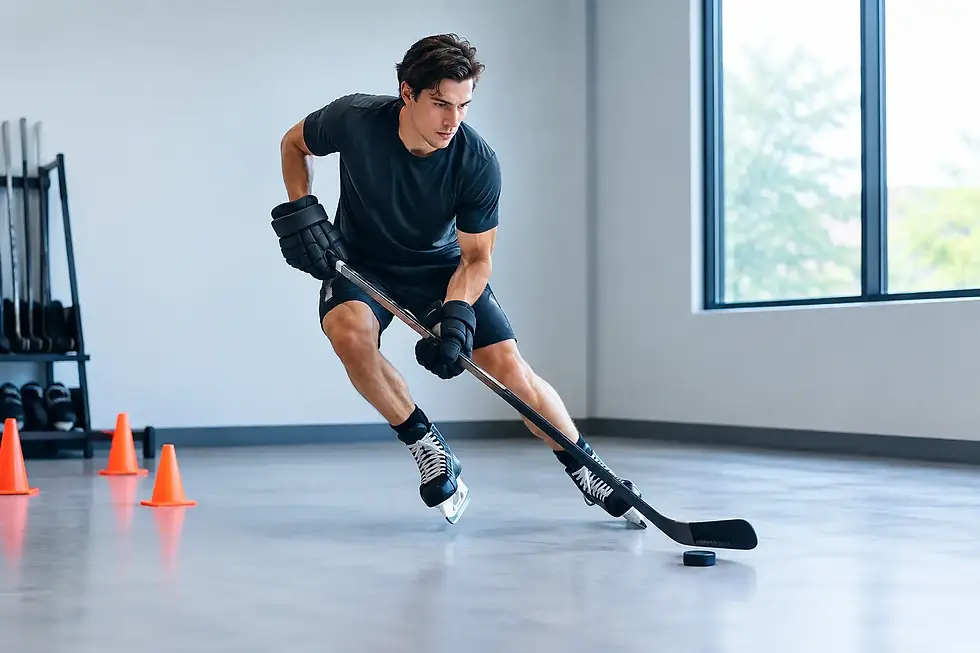
For hockey families, the appeal is obvious. More reps. More access. No waiting on rink schedules. But the training benefit depends on surface quality. A backyard rink or basement shooting lane should help a player work on stride mechanics, puck handling, passing, and shooting without constantly battling excessive drag.
Low friction synthetic ice panels make home training more productive because they reduce wasted effort. A player can focus on skill execution instead of just pushing through resistance. Goalies benefit too. Lateral movement, crease recoveries, and save selection all improve when the surface allows smoother movement patterns.
There is also a practical side. Better panels often require less corrective maintenance to stay enjoyable. That matters for parents who want a rink that gets used consistently, not one that becomes a project. If the install is modular and secure, the rink can also adapt as training needs change.
Why commercial buyers should be selective
Training centers, malls, community programs, and event operators have a different risk profile. They are not just buying panels. They are buying uptime, user experience, and long-term value. Low friction synthetic ice panels can support stronger utilization because they create a more convincing skating experience and hold up better under volume.
For a commercial rink, durability and friction are tied together. As the surface wears, glide can change. If the material is not engineered for repeated use, maintenance demands rise and the customer experience falls. That can affect programming, staff workload, and revenue potential.
Commercial operators also need confidence in installation. Large rinks expose every weakness in a panel system. Poor locking mechanisms, movement between sheets, or inconsistent manufacturing become much more visible at scale. A performance-led panel system helps protect the investment because it reduces those variables from the start.
The trade-offs buyers should understand
There is no serious synthetic ice conversation without trade-offs. Even the best low friction synthetic ice panels are still synthetic ice. They are designed to get much closer to real ice, not replace every characteristic of a refrigerated sheet in every environment. Expectations should be high, but realistic.
Price is another factor. High-performance panels typically cost more than commodity options. That is not a downside if the result is better glide, better wear life, and more useful training time. But buyers should be honest about use case. If the rink is for occasional novelty skating, a lower-tier product may seem acceptable. If the goal is skill development or commercial reliability, cutting corners usually gets expensive later.
Maintenance also depends on usage. Low-friction panels still need cleaning and proper care to perform well. Dust, debris, and neglect will affect glide on any surface. The difference is that premium panels are built to maintain quality more effectively when cared for correctly.
How to evaluate panels before you buy
Start with the skating outcome, not just the brochure. Ask how the panel is manufactured, what material is used, and how the company measures long-term performance. Look for specifics, not vague promises. Buyers should want to know how the surface handles wear, how secure the connection system is, and whether the panel is intended for residential, commercial, or both.
It is also smart to think about who will be using the rink most. A youth hockey player, a goalie coach, a figure skater, and a mall event organizer are all solving different problems. The best choice is the panel system that matches those demands without compromising on core skating quality.
That is why serious buyers look beyond generic claims and focus on engineering. SmartRink has built its reputation around exactly that approach - performance first, material quality first, skating results first. When the panel is built to reduce friction and maintain glide over time, the entire rink works harder for the people using it.
The best synthetic ice purchase is not the one that looks cheapest on paper. It is the one that keeps athletes training, customers skating, and owners confident that the surface will perform month after month. If the goal is to get better, faster, start with the panel that gives every stride a real chance to matter.


Comments