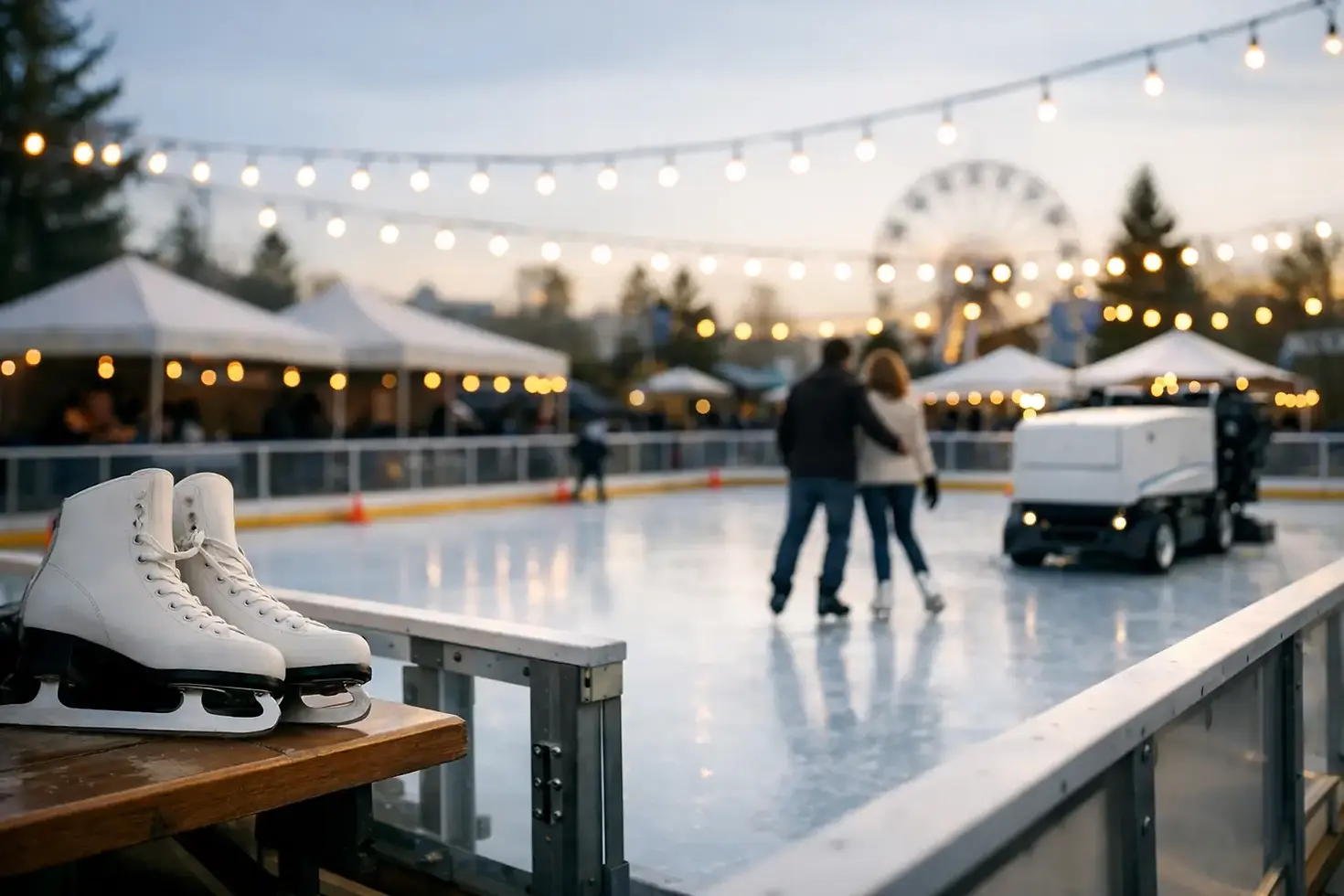
Portable Skating Rink for Events: What Matters
A portable skating rink for events can turn an empty plaza, mall concourse, festival lot, or corporate venue into the busiest spot on site. But not every portable rink delivers the same result. If the surface is slow, the panels separate, or the setup takes too long, the guest experience drops fast and the operating headaches start even faster.
For event operators, that gap matters. A rink is not just an attraction. It is a throughput business, a branding tool, and in many cases a direct revenue driver. The best systems create repeat traffic, support clean operation under heavy use, and give skaters a surface that feels good enough to keep them moving confidently. The wrong system becomes expensive storage.
What a portable skating rink for events really needs to do
A lot of buyers start with size and price. Those matter, but they should not lead the decision. A portable rink for events has to perform in real operating conditions, not just look good in a brochure.
That means the surface needs reliable glide from the first session to the last. It needs to handle rental skates, first-time skaters, children pushing trainers, and heavier traffic patterns near entrances and corners. It also needs connection strength. If panels shift, flex, or create noticeable seams, skaters feel it immediately. That affects confidence, safety, and overall satisfaction.
Setup speed matters too, especially for operators working tight venue schedules. A system that takes too much labor to install and remove will eat into margins. The same goes for maintenance. Synthetic ice is attractive because it removes the cost and complexity of refrigeration, but the quality of the panel material still determines how much cleaning, resurfacing, and replacement you will face over time.
Why surface quality changes the event outcome
Guests may not know resin types or pressing methods, but they know when a rink feels slow. They know when skating becomes work instead of fun. For performance-minded buyers, that is the first line item to take seriously.
High-quality synthetic ice is built to reduce friction and preserve glide as traffic builds. That is especially important at public events, where many users are novice skaters. Beginners need a surface that supports movement rather than punishes it. If every stride feels sticky, they tire quickly, fall more often, and spend less time on the rink. That hurts both customer experience and session value.
Material quality also affects wear. Commodity panels can look similar at a glance, but they do not age the same way. Lower-grade surfaces tend to scratch faster, lose consistency, and create a more uneven skating feel under commercial use. For event operators, that means more visible wear, more maintenance pressure, and a shorter useful life.
This is where engineered synthetic ice separates itself from low-cost alternatives. Better manufacturing methods, denser material, and stronger connection systems usually cost more upfront, but they are built for repeated installation cycles and heavy public traffic. In an event setting, that trade-off often makes financial sense.
Choosing the right size and layout
A portable skating rink for events should fit the venue, the audience, and the operating model. Bigger is not always better. A rink that overwhelms the available footprint can disrupt flow, reduce spectator space, and complicate staffing. A rink that is too small may create long lines and poor revenue potential.
For malls and brand activations, compact footprints can work well if the goal is visibility and steady turnover. For winter festivals and municipal events, a larger layout may be worth it because it creates more session capacity and a stronger visual centerpiece. The key is to think beyond dimensions and ask how the rink will function during peak traffic.
Entry and exit points matter. So does skate fitting space. If guests stack up at the perimeter, the rink itself may not be the bottleneck. Boards, barriers, and surrounding circulation should support the full experience, not just the skating surface.
A rectangular layout is often the most efficient for throughput and installation. Custom shapes can be visually impressive, especially for promotional events, but they may increase fabrication complexity, panel cutting, and setup time. Sometimes that extra branding value is worth it. Sometimes it is just more cost without a better operating result.
Indoor vs. outdoor use changes the spec
Not every event rink lives in the same environment. Indoor installations usually offer more predictable conditions, cleaner operation, and easier daily management. Outdoor setups can deliver bigger crowds and stronger seasonal appeal, but they come with more variables.
Weather exposure affects debris, moisture, and perimeter management. Even though synthetic ice avoids refrigeration, the rink still needs a stable, properly prepared base. Uneven ground will show up in the skating experience. Outdoor venues also need a plan for drainage, shelter, and cleaning frequency.
Indoor operators may prioritize aesthetics, noise control, and fast installation within strict venue windows. Outdoor operators may care more about durability, edge containment, and the ability to handle dirt, foot traffic, and repeated public use over several days or weeks. The right rink system depends on where it will work, not just how it will look at opening.
Installation and transport are part of the ROI
Portable means more than removable. A true event-ready rink should be designed for repeated assembly, disassembly, packing, shipping, and reinstallation without losing integrity.
This is where panel connection design deserves real attention. Weak connections slow down crews and can create movement under load. Stronger locking systems support faster installation and a more stable finished surface. That reduces labor time and protects the skating experience.
Transport efficiency matters too. Event companies and seasonal operators need systems that store well and travel without becoming a logistics problem. If a rink takes excessive trailer space, requires constant replacement pieces, or demands a large crew every time it moves, the operating cost rises quickly.
The best buyers evaluate installation cost over the life of the rink, not just at the first event. A slightly more expensive system with faster setup and lower maintenance can outperform a cheaper option by a wide margin over multiple seasons.
Safety, experience, and crowd confidence
Safety in an event rink starts with product quality, but it does not end there. Surface consistency, clean edges, stable barriers, and proper traffic management all shape how secure the rink feels.
For family events, confidence is everything. Parents want an attraction that feels organized and controlled. Venue managers want an installation that supports smooth supervision. Beginners want a surface where they can get their balance without fighting every stride.
That is why glide is not just a performance issue for hockey players or figure skaters. It is a public-use issue. A better skating surface helps users move more naturally, and that usually creates a calmer, more enjoyable rink environment.
Operators should also think about support features such as skate aids, entry matting, perimeter access, and staffing sightlines. These are not glamorous details, but they have a major effect on session quality and guest satisfaction.
How to judge value instead of chasing the lowest quote
Price shopping is normal. It is also where many event rink purchases go sideways. The lowest quote can be the most expensive option if the surface underperforms, the setup drains labor, or the panels wear out early.
A better buying question is simple: what will this rink cost to own and operate across multiple events? That includes transport, labor, cleaning, storage, replacement rates, and customer experience. If poor glide shortens session times or reduces repeat visits, that is a real cost. If visible wear hurts the presentation in a premium venue, that is a real cost too.
Commercial buyers should ask direct questions about material composition, manufacturing process, connection strength, expected wear under public use, and maintenance requirements. If the answers are vague, that tells you something. Strong suppliers can explain why their rink performs the way it does.
For operators who need a dependable portable skating rink for events, performance-led synthetic ice usually offers the strongest long-term case. That is especially true when the rink is expected to travel, attract crowds, and hold up under serious use. SmartRink has built its reputation around that exact standard - skating quality first, then durability, then operational practicality.
The best event rink is not the one that is easiest to sell in a pitch meeting. It is the one that still skates well after the crowd shows up, the schedule gets tight, and the novelty wears off. Choose the surface like your reputation depends on it, because at an event, it does.


Comments