Synthetic Ice Rink Buyer Guide
A synthetic ice rink looks simple until you have to buy one. Then the real questions show up fast: Why do some panels feel slow? Why do some rinks separate, chip, or wear out early? And why can two surfaces that look similar on paper perform very differently under skates?
This synthetic ice rink buyer guide is built for buyers who care about results, not just square footage. Whether you are creating a backyard hockey training area, a figure skating practice space, a goalie lane, or a commercial rink for public use, the right choice comes down to performance over time. Price matters, but glide, durability, connection strength, and maintenance usually decide whether the rink becomes an asset or a regret.
What a synthetic ice rink should actually deliver
The first mistake many buyers make is treating synthetic ice like a commodity. It is not. Panels may look alike in photos, but the skating experience is shaped by material quality, manufacturing method, density, surface finish, and how the panels lock together.
A good rink should give skaters predictable glide, solid edge control, and a surface that stays stable under repeated use. For hockey players, that means realistic stride work, stickhandling, shooting, and skating drills without feeling like they are fighting the surface. For figure skaters, it means a cleaner, more consistent platform for practice. For commercial operators, it means a rink that can handle traffic and still present well.
The key point is simple: synthetic ice is only a smart investment when it helps people skate better and keeps doing that for years.
Start with your use case, not the panel size
Before comparing products, define how the rink will be used. A home practice pad for a youth hockey player has different demands than a mall attraction or community installation. If your main goal is skill development, glide and surface consistency should lead the buying decision. If your rink will host public sessions, durability, traffic tolerance, and appearance become just as important.
Size matters, but purpose matters more. A smaller premium surface often delivers better training value than a larger low-grade rink that feels slow and frustrates skaters. For a residential setup, many families do better with a focused practice area designed for skating drills, shooting, and synthetic puck handling. Commercial buyers usually need to think beyond footprint and evaluate flow, entry points, surrounding barriers, and maintenance access.
That is why experienced manufacturers ask how the rink will be used before recommending a system. The best product for a goalie training lane is not always the same product for public skating or event rental.
The most important factor in any synthetic ice rink buyer guide: glide
If you remember one thing from this synthetic ice rink buyer guide, make it this: glide is not marketing fluff. It is the difference between a training surface athletes want to use and one they avoid.
Glide is influenced by the resin, the manufacturing process, and the panel finish. Higher-quality synthetic ice typically uses engineered high molecular weight materials designed to reduce friction and improve skate response. Lower-end panels can feel sticky, especially after wear begins or if the material is inconsistent from panel to panel.
Buyers should ask direct questions. What material is used? How is it pressed or formed? Is the product built for performance skating or casual novelty use? Does the manufacturer speak in measurable product terms, or only in broad claims? Serious suppliers can explain why their surface performs the way it does.
There is always a trade-off here. Even the best synthetic ice does not behave exactly like refrigerated ice. But premium panels narrow that gap significantly, and that difference matters most for players and skaters who are training with purpose.
Material quality and manufacturing separate premium from cheap
Not all synthetic ice is manufactured the same way, and this is where many buying decisions are won or lost. A panel made from better resin and produced with a more controlled process will usually deliver stronger glide, better wear resistance, and longer useful life.
This is also where a premium product earns its price. Cheap panels may save money up front, but if they create more drag, generate uneven wear, or require earlier replacement, the cost advantage disappears quickly. For commercial buyers, poor-quality panels can also lead to customer complaints, reduced repeat visits, and a surface that loses visual appeal faster than expected.
A performance-led manufacturer should be able to explain its engineering clearly. In SmartRink's case, that means emphasizing sinter-pressed high molecular weight resin, connection stability, and measurable skating quality rather than selling commodity sheets at the lowest possible price. That is the right conversation to have because material science shows up every time the blade touches the surface.
Don’t overlook the panel connection system
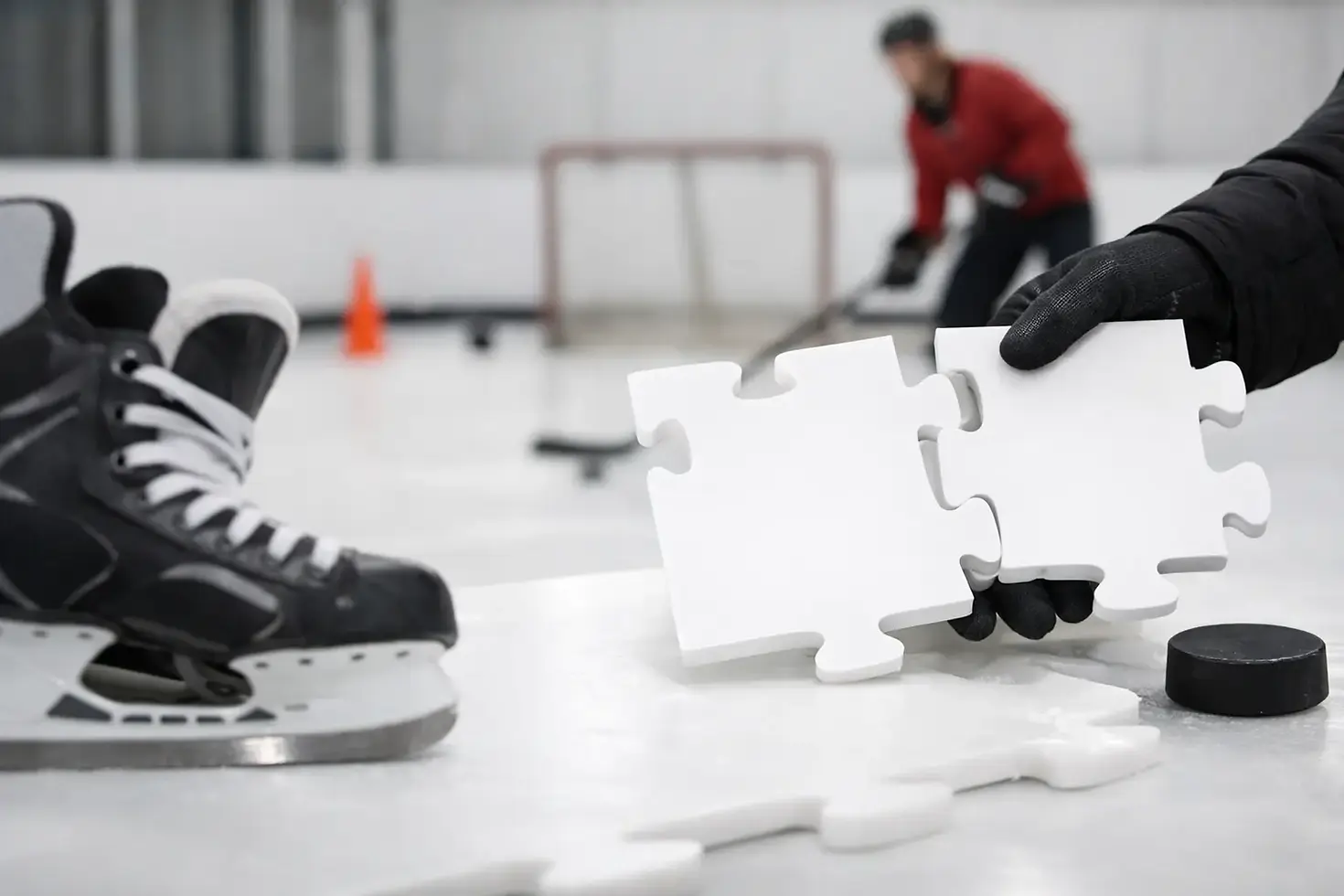
A synthetic rink is only as good as the way the panels hold together. Weak connections create movement, gaps, uneven seams, and a skating experience that feels broken up instead of controlled. That is frustrating in a home rink and unacceptable in a commercial installation.
Connection design affects installation speed, surface stability, and how well the rink handles repeated use, temperature changes, and traffic. A better locking system helps keep the surface flat and reduces the likelihood of edge separation over time. That becomes especially important in larger installations where small alignment issues can multiply across the floor.
If you are comparing options, ask how the panels connect, how often rinks are assembled and disassembled, and whether the system is designed for permanent, semi-permanent, or portable use. Event operators, for example, need a different balance of portability and strength than families building a year-round backyard training space.
Maintenance is part of the real cost
Synthetic ice is attractive because it removes refrigeration, resurfacing equipment, and the heavy energy costs of real ice. But maintenance is not zero, and buyers should be wary of any pitch that suggests otherwise.
Every rink needs regular cleaning to remove dirt and debris that can affect glide and surface appearance. Skating activity creates shavings that need to be managed. Some products are easier to maintain than others based on surface quality and how the material wears. Better panels generally retain performance more consistently and can reduce the amount of effort needed to keep the rink skating well.
For commercial operators, maintenance should be planned like any other operating routine. For home users, it should be realistic enough that the rink gets used often without becoming a chore. Easy upkeep is not a small benefit. It directly affects long-term satisfaction.
Residential buyers should think in training outcomes
Parents and athletes often start with the question, How big should our rink be? A better question is, What do we want to improve? If the answer is stride mechanics, edge work, shooting, passing, or goalie movement, then the right synthetic ice surface can create a major year-round advantage.
The strongest home installations are built around repetition. The rink is close, available every day, and ready when the athlete is. That convenience compounds. More touches, more reps, more confidence. But that only works if the surface performs well enough to keep the athlete engaged.
For home buyers, durability also matters because the rink may sit outdoors, handle changing weather, and support off-skate training activity around it. A lower-grade panel that degrades early can turn a family investment into a disappointment faster than expected.
Commercial buyers need ROI, durability, and experience
Commercial and institutional buyers have a wider set of priorities. Performance still matters, but so do user throughput, visual presentation, maintenance labor, and long-term operating value. A rink in a shopping mall, event venue, training center, school, or community space has to do more than let people skate. It has to work as a business asset.
That means looking at lifecycle value rather than purchase price alone. A better surface can support stronger customer satisfaction, repeat traffic, better athlete outcomes, and fewer headaches for staff. It can also help justify premium positioning if the rink is part of a paid experience or specialized training offer.
In commercial settings, installation support and project planning also carry real weight. A supplier that understands layout, traffic flow, subfloor needs, and operational realities brings more value than one that simply ships panels.
Questions worth asking before you buy
A serious buyer should ask a manufacturer how the product is made, what level of skate performance it is designed for, how the panels connect, what maintenance is required, and what type of customer uses that surface most successfully. You should also ask what happens after purchase. Is there guidance on layout, installation, expansion, or replacing damaged sections if needed?
The quality of the answers usually tells you a lot. Specialists talk about friction, wear, stability, and use case fit. Commodity sellers tend to stay vague and compete on price.
A synthetic rink is not just a flooring purchase. It is a performance surface. If you buy on that basis, you are much more likely to end up with a rink that gets used hard, holds up well, and delivers what you expected when you signed off on the investment.
The right rink should make the next skate easier to start, not easier to postpone.


Comments